
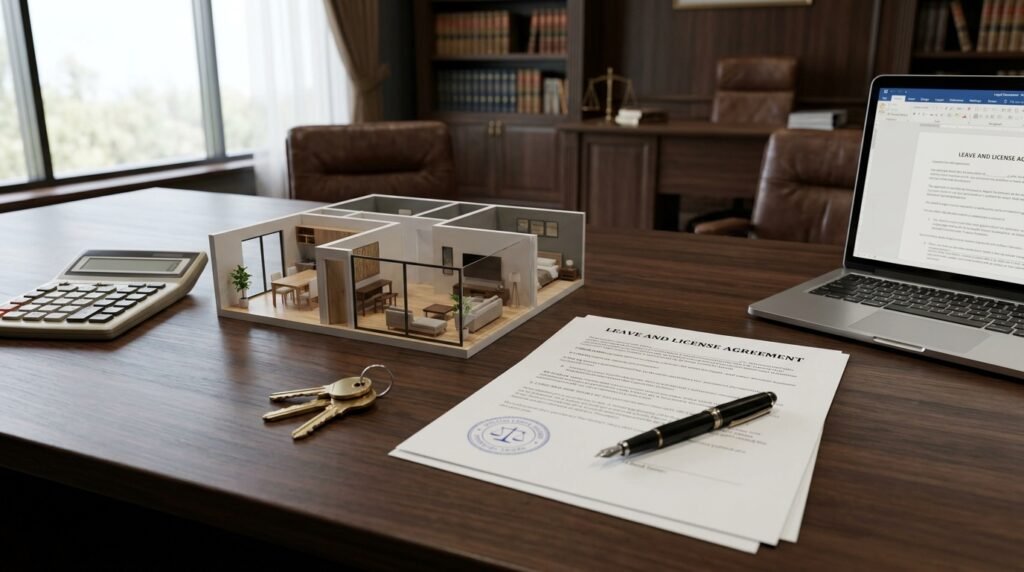
Renting out a property or moving into a new one almost always starts with the same document — yet leave and license agreement drafting is one of the most commonly rushed pieces of paperwork in real estate. People download a template off the internet, fill in a few blanks, and assume it’s done. Then a dispute comes up over the security deposit, an early exit, or who’s responsible for a repair, and the agreement turns out to have no real answer.
Draft My Documents prepares leave and license agreements that hold up in exactly those situations — clear on rights, responsibilities, and what happens when something doesn’t go as planned.
A leave and license agreement grants someone the right to use a property for a limited period, in exchange for a fee, without creating a tenancy or transferring any interest in the property itself. This is an important distinction from a traditional lease — a license can be withdrawn more easily and doesn’t hand the occupant the same legal protections a tenant would have. In several states, including Maharashtra, this structure is the standard way residential and commercial spaces are rented out, and registration of the agreement is legally required. You can register an agreement online through the Maharashtra Department of Registration & Stamps’ official e-registration portal, which is the government’s designated system for this process.
Because this type of agreement is used so frequently — for a single room, a full flat, or a commercial unit — it’s easy to assume any standard format will do. In practice, proper leave and license agreement drafting is what determines whether the document actually protects both sides when a disagreement comes up, rather than just sitting in a drawer until it’s needed and turning out to be vague on the one point that matters.
The most common issues aren’t complicated — they’re details left out. A security deposit refund condition that’s never spelled out. A maintenance responsibility that both parties assumed the other would handle. An agreement drafted for 11 months that never mentions what happens on renewal, or one that skips registration entirely, which can weaken its enforceability if a dispute lands in court. Relying on a template built for a different city or property type, without adjusting it to local stamp duty and registration rules, is another frequent misstep — which is exactly why leave and license agreement drafting is worth getting right the first time rather than fixing later.
A generic template has no way of knowing your specific property, your local registration requirements, or the particular concerns you and the other party have. Proper leave and license agreement drafting accounts for all of that — spelling out exactly what’s expected on both sides, meeting local registration and stamp duty requirements, and giving you a document that actually resolves a dispute rather than creating one.
We gather the property, licensor, and licensee details from you. We clarify the license period, fee structure, and any specific terms you want included. Our team prepares a complete draft covering every essential clause. You review the draft and request any changes before we finalize it. You receive a ready-to-register agreement, formatted per local requirements.
A rental arrangement runs smoothly right up until something goes wrong — and that’s exactly when well-handled leave and license agreement drafting earns its worth. Alongside this service, we also handle Sale Deeds, Gift Deeds, Power of Attorney, Wills, Affidavits, Indemnity Bonds, and Property Search Reports, so you have one place to turn to for every document your property needs.
A lease creates a tenancy and transfers certain rights to the tenant, while a leave and license agreement only grants permission to use the property for a limited period, without creating any tenancy rights.
In many states, including Maharashtra, registration is legally required regardless of the agreement’s duration, and an unregistered agreement can be difficult to enforce in a dispute.
An 11-month term is commonly used to avoid the additional legal protections and rent control provisions that can apply to longer-term tenancies, though the agreement can be renewed after it ends.
This depends entirely on how the agreement’s refund conditions were drafted, which is why clearly specifying deductions and refund timelines during drafting is so important.
Yes, provided the agreement includes a clear termination clause specifying the notice period and conditions under which either party can exit early.

WhatsApp us