Trust Deed Drafting: 5 Key Clauses | Draft My Documents
Introduction
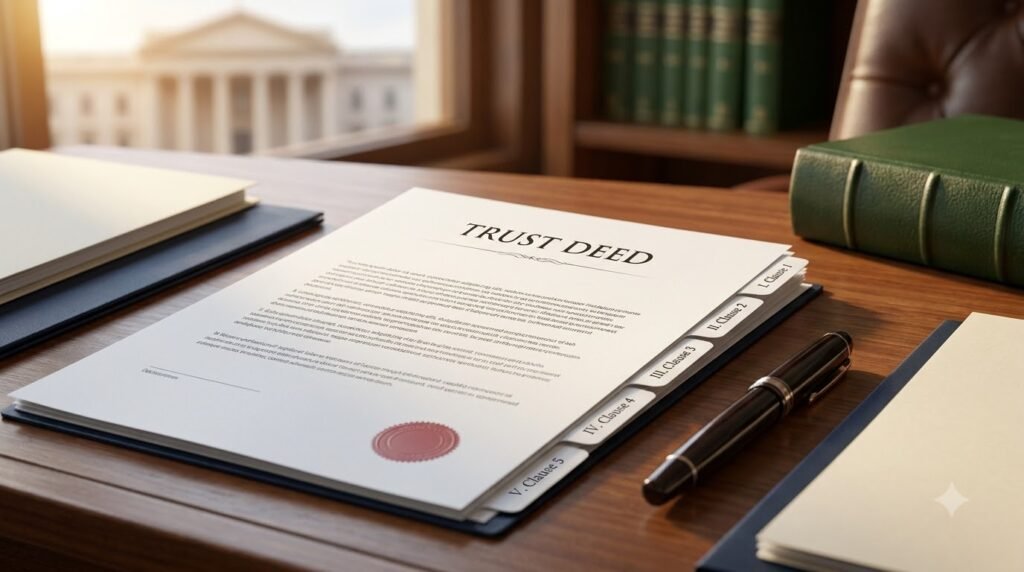
Trust deed drafting is the legal process of creating the founding document that governs how a trust is managed, who benefits from it, and what powers the trustee holds. It’s the single document a trust’s entire legal standing rests on.
At Draft My Documents in Mumbai, we prepare trust deeds with the precision this kind of legal instrument genuinely requires, whether it’s for family wealth planning, charitable purposes, or property management.
A trust deed is a legal document that establishes a trust, naming the settlor (who creates it), the trustee (who manages it), and the beneficiaries (who benefit from it). It sets out the trust’s purpose, the assets involved, and the rules governing how those assets are managed and eventually distributed.
Without a properly drafted trust deed, a trust has no clear legal foundation to operate on.
Five Essential Clauses in Trust Deed Drafting
1. Identification of Parties The deed must clearly name the settlor, trustee, and beneficiaries, along with their roles and relationship to the trust.
2. Trust Property and Purpose A clear description of the assets being placed in trust, along with the specific purpose the trust is meant to serve, forms the core of the document.
3. Powers and Duties of the Trustee Trust deed drafting must precisely define what the trustee can and cannot do, including investment decisions, distributions, and administrative powers.
4. Distribution Terms The deed should specify how and when beneficiaries receive distributions, including any conditions attached to those distributions.
5. Amendment and Termination Provisions Clear terms on whether and how the trust deed can be amended, and the conditions under which the trust itself terminates, prevent future disputes.
Why Precision Matters So Much Here
A trust deed often governs assets and relationships over many years, sometimes decades. Vague or incomplete trust deed drafting can lead to disputes among beneficiaries, uncertainty about trustee authority, or even challenges to the trust’s validity.
Trust deed drafting is commonly needed for family trusts managing inherited property, charitable trusts supporting a specific cause, and private trusts set up for asset protection or succession planning. Each of these purposes requires slightly different clauses and structuring.
Our Trust Deed Drafting Process
Understanding Your Objective – We discuss the trust’s purpose, assets, and the parties involved.
Structuring the Deed – We determine the right clauses and structure based on your specific objective.
Draft Preparation – Our team prepares a complete, legally precise trust deed.
Review With You – You review the draft to confirm it reflects your intentions accurately.
Registration Guidance – We guide you through any registration requirements applicable to your trust.
Why Choose Draft My Documents
Trust deed drafting demands the same careful, detail-oriented approach we bring to every legal document we prepare — sale deeds, wills, and property agreements included. Getting the structure and clauses right from the start protects the trust’s purpose for years to come.
Address: Shop No 49, 1st Floor, Guru Gobind Singh Marg, Mulund Colony, Mulund West, Mumbai – 400082
Frequently Asked Questions
1 . Does a trust deed need to be registered?
Registration requirements depend on the type of trust and the assets involved; immovable property trusts typically require registration to be legally effective.
2. Can a trust deed be changed after it's created?
This depends on the amendment provisions included in the original trust deed drafting; some trusts allow changes while others are structured to be irrevocable.
3. Who can be named as a trustee?
Any competent adult or an institution capable of holding and managing property can generally be named as a trustee, depending on the trust’s specific requirements.
4. What's the difference between a trust deed and a will?
A trust deed typically takes effect immediately upon creation and can operate during the settlor’s lifetime, while a will only takes effect after death.
5. Can a trust deed cover multiple types of assets?
Yes, a trust deed can be drafted to cover property, investments, and other assets, depending on the trust’s purpose and scope.