Introduction: What Is Sale Deed & Why Is It Important?
If you are buying or selling a property in India, one legal document you must understand clearly is the sale deed. But what is sale deed, and why does it play such a critical role in real estate transactions?
A sale deed is the most important legal document that proves the lawful transfer of ownership from the seller to the buyer. Without a properly drafted and registered sale deed, a property transaction is legally incomplete and risky.
At Draft My Documents, we help individuals and businesses create accurate, legally compliant property documents, including professionally drafted sale deeds, ensuring peace of mind and legal safety.
In this comprehensive guide, we will cover:
-
What is sale deed (meaning and definition)
-
Key components of a sale deed
-
Sale deed format
-
Registration process
-
Legal validity and importance
-
Common mistakes to avoid
-
FAQs and expert insights
Let’s begin with the basics.
What Is Sale Deed? (Meaning & Legal Definition
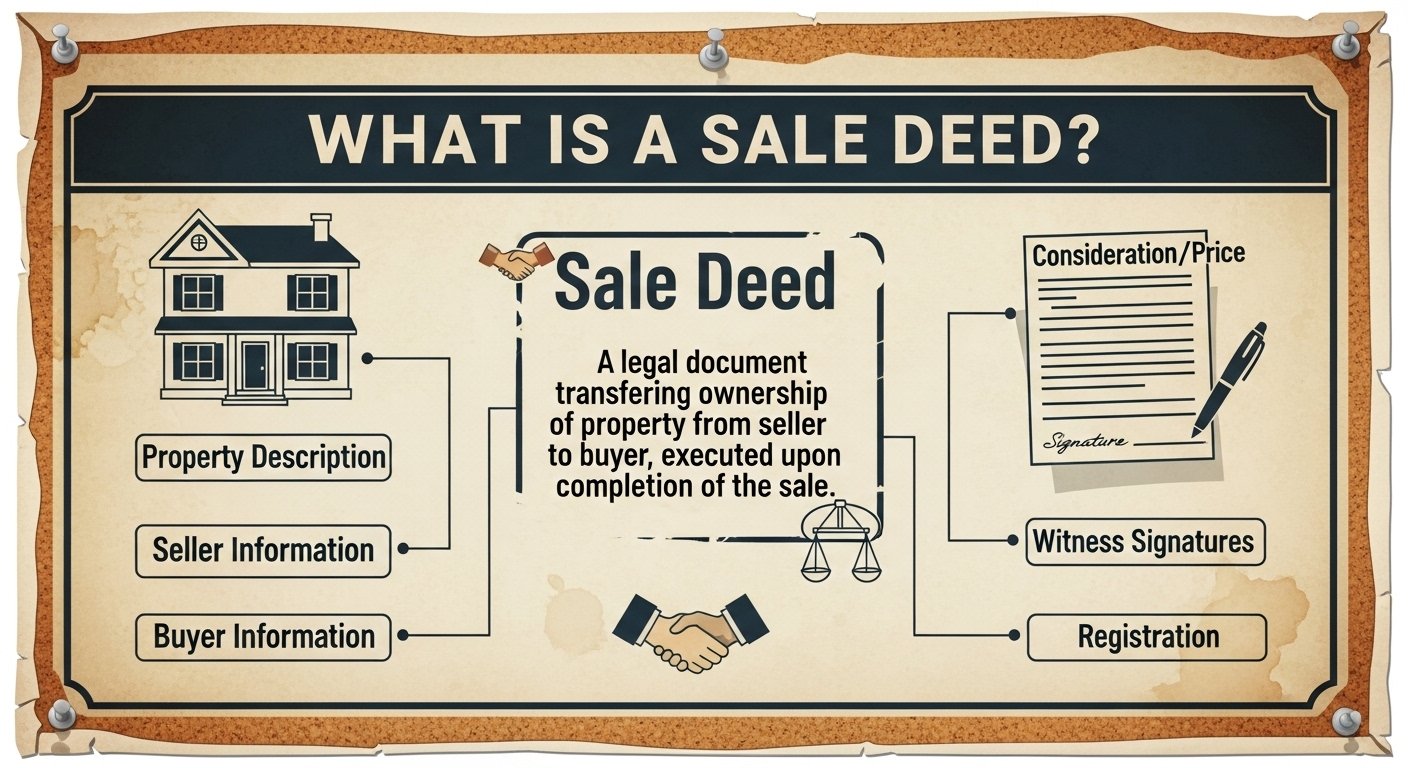
A sale deed is a legal document that confirms the transfer of ownership of a property from one person (seller) to another (buyer) in exchange for monetary consideration.
In simple terms, a sale deed is proof that the property has legally changed hands.
Legal Definition of Sale Deed:
As per the Transfer of Property Act, 1882, a sale deed is a document that finalizes the sale of immovable property and ensures legal ownership transfer.
So, if you are wondering what is sale deed, remember:
A sale deed is the final and binding agreement between buyer and seller that legally completes a property transaction.
Why Is a Sale Deed Important?
Understanding what is sale deed also means knowing why it holds such legal importance.
Key Reasons Why a Sale Deed Is Essential:
-
Establishes legal ownership
-
Protects buyer’s rights
-
Prevents future disputes
-
Acts as legal evidence in court
-
Required for property registration & mutation
-
Mandatory for bank loans & resale
Without a registered sale deed, the buyer cannot legally claim ownership of the property.
Key Elements of a Sale Deed
A professionally drafted sale deed must include the following components:
1. Parties Details
Full details of the buyer and seller including:
-
Full name
-
Address
-
Age
-
Identification proof
2. Property Description
Accurate details of the property including:
-
Location
-
Dimensions
-
Boundaries
-
Property number
-
Floor details
3. Sale Consideration
Total purchase amount and payment method details.
4. Advance Payment Details
If any token amount or advance has been paid, it must be mentioned clearly.
5. Mode of Payment
Payment methods such as:
-
Bank transfer
-
Cheque
-
Demand Draft
-
Online payment
6. Ownership Transfer Clause
This confirms that ownership is fully transferred.
7. Indemnity Clause
Protects buyer from legal disputes.
What Is Sale Deed Registration Process in India?
To fully understand what is sale deed, you must know the registration process, because unregistered sale deeds are not legally valid.
Step-by-Step Sale Deed Registration Process:
-
Drafting of sale deed
-
Stamp duty payment
-
Visit Sub-Registrar office
-
Biometric verification
-
Signing before registrar
-
Registration completion
Documents Required:
-
Original property documents
-
Encumbrance certificate
-
Identity proof
-
Address proof
-
PAN card
-
Property tax receipts
You can also check government property registration guidelines on India.gov.in (external authoritative source).
Sale Deed Format – What Should It Include?
A standard sale deed format includes:
-
Title of document
-
Agreement date
-
Seller & buyer details
-
Property description
-
Payment details
-
Transfer clause
-
Legal assurances
-
Witness signatures
Important Tip:
Always use professionally drafted formats from trusted platforms like Draft My Documents to avoid legal loopholes.
Difference Between Sale Agreement & Sale Deed
Many people confuse what is sale deed with sale agreement, but both are very different.
| Sale Agreement | Sale Deed |
|---|---|
| Preliminary document | Final document |
| Promises future sale | Confirms ownership transfer |
| Not mandatory to register | Mandatory registration |
| No ownership transfer | Legal ownership transferred |
Legal Validity of Sale Deed in India
A sale deed becomes legally valid only when:
-
Stamp duty is paid
-
Registration is done
-
Both parties sign
-
Witnesses are present
Without registration, a sale deed has no legal enforceability in court.
Common Mistakes to Avoid While Drafting a Sale Deed
Understanding what is sale deed also means avoiding costly mistakes.
Common Errors:
-
Incorrect property description
-
Incomplete buyer/seller details
-
Wrong payment breakup
-
Missing legal clauses
-
Not registering the deed
Professional drafting ensures error-free legal documentation.
Benefits of Professional Sale Deed Drafting
At Draft My Documents, we offer expert legal drafting services for sale deeds.
Our Advantages:
-
Legally compliant formats
-
Customized drafting
-
Error-free documentation
-
Fast turnaround
-
Affordable pricing
Visit: https://draftmydocuments.in/
Who Should Get a Sale Deed Drafted?
You should get a professionally drafted sale deed if:
-
You are buying a house
-
You are selling land
-
You are transferring inherited property
-
You are purchasing commercial property
-
You are buying a plot
Frequently Asked Questions (FAQs)
Q1. What is sale deed in simple words?
A sale deed is a legal document that proves the transfer of property ownership from seller to buyer.
Q2. Is sale deed compulsory?
Yes, for property ownership transfer, sale deed registration is legally mandatory in India.
Q3. Can sale deed be cancelled?
Yes, a sale deed can be cancelled through mutual agreement or court order.
Q4. Is notarized sale deed valid?
No. A sale deed must be registered, notarization alone is not sufficient.
Q5. How much stamp duty is required for sale deed?
Stamp duty varies from state to state, usually between 4% to 8% of property value.
Conclusion – What Is Sale Deed & Why You Need It Right
To summarize, understanding what is sale deed is crucial for anyone dealing with property transactions. It is the foundation of legal ownership, protecting both buyers and sellers from disputes.
A properly drafted and registered sale deed ensures:
-
Legal safety
-
Peace of mind
-
Clear ownership rights
-
Financial security
Get Your Sale Deed Drafted by Experts
Avoid legal risks. Let professionals handle your documentation.
Draft your Sale Deed today at:
https://draftmydocuments.in/
Draft My Documents – Your Trusted Legal Drafting Partner