Introduction
Estate planning often brings one big question: What is the difference between a will and a trust?
While both help secure your assets and define how they should be distributed, they function very differently—and choosing the right one can protect your family from financial confusion, legal disputes, and emotional stress.
According to a 2023 estate research survey, over 60% of Indian families face delays in asset distribution due to missing or unclear wills. Many others create simple wills but overlook the value of a trust, which can offer greater control and privacy.
In this comprehensive guide, you’ll understand what the difference is—and between a will and a trust, how they work, what to choose for your situation, and how services like Draft My Documents (draftmydocuments.in) help individuals draft both legally valid wills and trusts with expert clarity.
What Is a Will?
A will is a legal document that outlines how your assets should be distributed after your death. It only becomes effective after the individual (testator) passes away.
Key Features of a Will
Takes effect only after death
Must be signed and witnessed
Covers asset distribution and guardianship
Can be updated anytime
Simple and cost-effective
What a Will Typically Includes
List of your assets
Beneficiaries and their shares
Guardian appointment for minor children
Executor appointment
Special instructions or wishes
Wills are easy to create and recognized by law under the Indian Succession Act.
What Is a Trust?
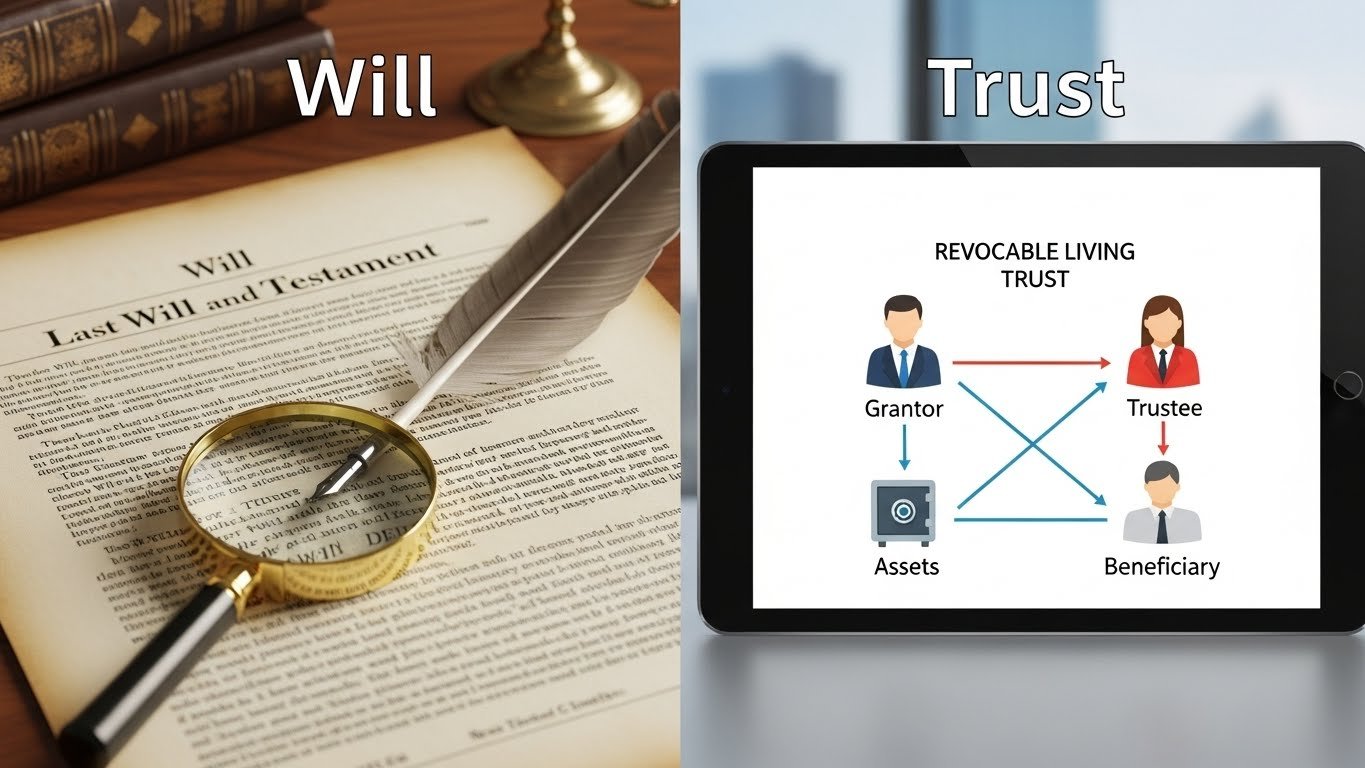
A trust is a legal arrangement where a person (the settlor) transfers assets to a trustee, who manages them for the benefit of beneficiaries.
Trusts can operate during your lifetime or after your death, depending on the type.
Key Features of a Trust
Can take effect immediately
Helps manage and protect assets
Avoids probate in most cases
Provides greater control over distribution
Can offer tax benefits
Common Types of Trusts
Living Trust (Revocable Trust)—canthe difference is be changed anytime
Irrevocable Trust – cannot be modified once created
Minor Trust – protects assets for children
Family Trust—ideal—can—ideal for multiple beneficiaries
Trusts are especially beneficial for asset protection and long-term financial planning.
What Is the Difference Between a Will and a Trust?
Below is a clear, structured comparison to understand what the difference is between a will and a trust:
1. Timing of Effect
Will
Becomes active only after death
Used primarily for asset distribution
Trust
Can be effective immediately
Manages assets during your lifetime and after
This is one of the major differences between a will and a trust.
2. Probate Requirement
Will
Must go through probate, a court-supervised process
Probate can take months or years
Trust
Usually avoids probate
Allows faster distribution of assets
This makes trusts more private and efficient.
3. Privacy
Will
Becomes a public document during probate
Trust
Remains private
Only trustees and beneficiaries access it
4. Level of Control
Will
Limited to after-death distribution
Trust
Allows control of assets during life
Can set rules like:
Monthly payouts
Conditional inheritance
Protection for minors
Great for families with complex assets.
5. Cost
Will
Affordable and simpler
Perfect for individuals with straightforward assets
Trust
More expensive
Ideal for high-net-worth individuals or complex estates
6. Asset Protection
Will
Does not protect assets from legal claims
Trust
Offers stronger protection from disputes, creditors, or misuse
7. Guardianship for Minors
Will
Allows parents to appoint guardians
Trust
Cannot appoint guardians (done through a will)
8. Flexibility
Will
Easy to update
Trust
Revocable trusts offer flexibility
Irrevocable trusts are fixed once created
Summary: Difference Between a Will and a Trust
| Feature | Will | Trust |
|---|---|---|
| When it takes effect | After death | During life or after |
| Probate | Required | Avoided |
| Privacy | Public | Private |
| Cost | Low | Higher |
| Control | After death only | Full control during life |
| Asset protection | Limited | Strong |
| Guardian for minors | Yes | No |
| Use case | Simple estates | Complex or large estates |
Which One Should You Choose?
To decide between a will and a trust, consider:
Choose a Will If:
You have simple assets
You want to name guardians
You want a cost-effective option
You want to clearly specify asset distribution
Choose a Trust If:
You want asset protection
You have minor children and want regulated inheritance
You own multiple properties
You want to avoid probate
You want confidential estate planning
In many cases, people use both a will and a trust for maximum protection.
Why Choose Draft My Documents for Wills and Trusts?
Draft My Documents (draftmydocuments.in) is one of India’s most trusted platforms for will writing and trust creation.
Legally Drafted Documents
All wills and trusts are prepared by experienced legal professionals.
100% Confidential
Your personal and financial details remain secure.
Fast Turnaround
Documents are prepared within 24–48 hours.
Complete Guidance
From asset listing to signing instructions—everything is handled.
Affordable Pricing
Professional estate planning without high legal costs.
FAQs About the Difference Between a Will and a Trust
1. What is the main difference between a will and a trust?
A will becomes effective after death, while a trust can operate during life and after.
2. Is a trust better than a will?
A trust offers more control and avoids probate, but a will is simpler and cheaper. Each serves a purpose depending on your needs.
3. Can I have both a will and a trust?
Yes, many individuals use both to ensure full protection.
4. Which one should I use for minor children?
A will is required for appointing guardians.
5. Are trusts legal in India?
Yes, trusts are governed under the Indian Trusts Act, 1882.
6. Do trusts save taxes?
Some types of trusts offer tax advantages, depending on structure and usage.
Conclusion: Make the Right Choice for Your Future
Understanding what the difference is between a will and a trust is essential for proper estate planning. While a will ensures your wishes are understood after your passing, a trust gives you greater control and privacy even during your lifetime.
Whether you need a will, a trust, or a combination of both, expert guidance ensures everything is legally sound and perfectly aligned with your goals.
Start your will or trust today at https://draftmydocuments.in.
Protect your legacy with clarity, confidence, and expert support.