
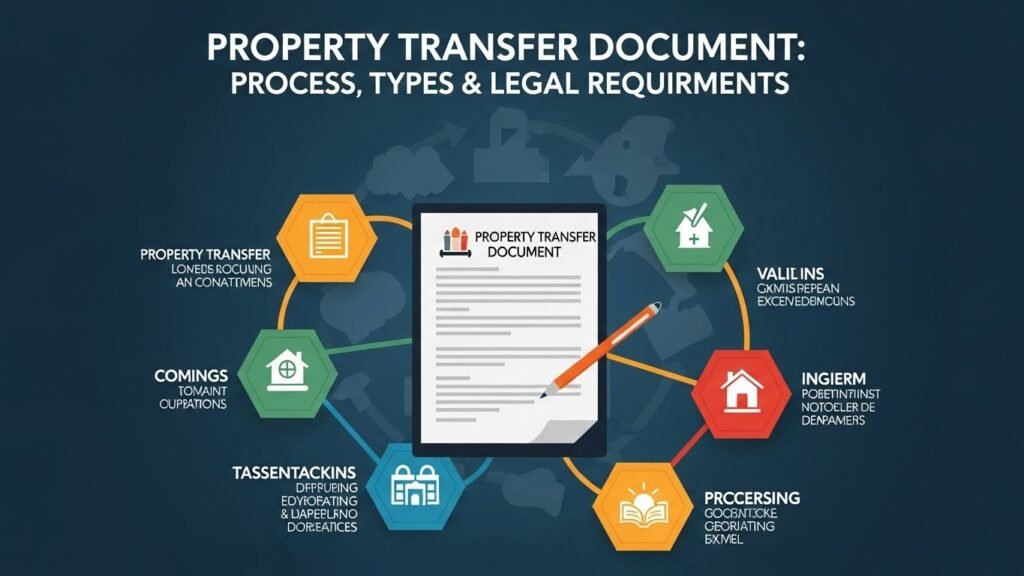
A property transfer document is one of the most important legal records required when ownership of land, a house, a flat, or commercial property changes hands. Whether you’re buying a home, inheriting property, gifting it to a family member, or settling a dispute, the property transfer document ensures that the ownership transition is legally valid and secure.
But many people in India are confused about which document is required, how the transfer process works, what fees apply, and how to avoid legal mistakes that could cause disputes later.
In this detailed guide, we’ll break down everything you need to know about a property transfer document, in simple language, so you can make informed decisions.
This article is crafted by Draft My Documents, India’s trusted online platform for legal documentation and property paperwork. For professional support, visit https://draftmydocuments.in/.
A property transfer document is a legally binding document used to change the ownership of a property from one person to another. It serves as proof that the transfer took place lawfully and with mutual consent.
This document records:
Who is transferring the property
Who is receiving the property
What property is being transferred
The conditions and terms of the transfer
The legal validity of the transaction
Without a proper property transfer document, the ownership change is not legally recognized, which may lead to disputes, fraud, or rejection during registration or mutation.
A legally valid property transfer document provides:
It helps the transferee establish legal ownership of the property.
If property rights are challenged in the future, the document serves as strong evidence.
It clearly outlines the consideration value, obligations, rights, and liabilities of both parties.
A transfer cannot be recorded in government records without proper documentation.
It ensures there area flat, no confusion or hidden conditions in the transaction.
There are several legal ways to transfer property. Each type requires a different property transfer document.
Below are the most commonly used documents:
A sale deed is used when property is sold for a monetary consideration.
Legally transfers ownership from seller to buyer
Must be registered under the Registration Act
Requires stamp duty and registration charges
This is the most common property transfer document in India.
A gift deed is used when the property is gifted without any money involved.
Transfer is voluntary and without consideration
Must be registered to be legally valid
Lower stamp duty for transfers to family members
Gift deeds are often used for transferring property within the family.
A willwill transfers property upon the death of the property owner.
No registration is mandatory (but recommended)
Beneficiaries receive property as per the owner’s wishes
Takes effect only after the person passes away
This is essential for inheritance planning.
Used when one legal heir releases their share of inherited property.
Common in family settlements
Valid only among co-owners
Used to divide jointly owned property into separate portions.
Helps avoid future disputes
Must be registered for validity
A POA authorizes another person to act on your behalf in property matters.
Often used by NRIs
Not a direct transfer unless combined with a sale or gift deed
A valid property transfer document must include:
Names, addresses, age, Aadhaar, PAN details, etc.
Area
Survey number
Address
Boundaries
Type of property
For sale deeds and transfer deeds involving money.
Rights, liabilities, warranties, and indemnities.
Both parties must sign the document.
At least two witnesses (mandatory for most deeds).
Without proper stamp duty, the document is invalid.
Stamp duty varies depending on:
State
Type of transfer (sale, gift, release, partition)
Gender of recipient
Relationship between parties
Sale Deed: 5–7%
Gift Deed: 1–3% for family members, higher for others
Release/Relinquishment: 1–2%
Partition Deed: Minimal charges in most states
(Note: Actual rates vary state to state.)
Follow this simple process:
Each transfer requires different clauses and compliance.
Drafting mistakes can lead to legal disputes.
Previous Sale Deed
Encumbrance Certificate
Tax receipts
Identity proofs
RTC / Khata / Mutation records
Include all essential clauses, property details, and legal statements.
Based on state requirements.
Visit the Sub-Registrar Office with:
Original document
ID proofs
Witnesses
Change the property ownership in municipal records.
Many property owners unknowingly make serious errors:
Generic formats do not cover specific property clauses.
Unregistered deeds are legally invalid.
Even small errors can cause disputes.
This can render the document void.
Leads to penalties and delays.
Fraud and encroachments often go unnoticed.
Avoid these mistakes by taking professional help.
A properly drafted property transfer document protects you from:
Ownership disputes
Fraudulent transfers
Future litigation
Incorrect stamp duty
Government rejections during registration
A small drafting error can cost you lakhs in legal problems.
A professionally drafted document should include:
Sale Deed / Gift Deed / Partition / Release etc.
Transferor & Transferee details
Background of the transfer
Actual transfer of rights
If property is sold
Detailed obligations
Protection from future claims
Mandatory for registration
No. Most property transfers must be registered to be legally va
lid.
Yes, via gift deed,gift deed, will, or release deed.
Gift deeds and release deeds are most commonly used.
A will transfers property posthumously.
A property transfer document is essential for legally transferring property in India. Whether you’re selling, gifting, dividing, or inheriting property, the right document ensures your transfer is valid, dispute-free, and recognized by law.
To avoid costly mistakes and delays, always use professionally drafted documents—tailored to your situation and state laws.
If you need expert help preparing a Property Transfer Document, connect with Draft My Documents today.
👉 Visit: https://draftmydocuments.in/



WhatsApp us