
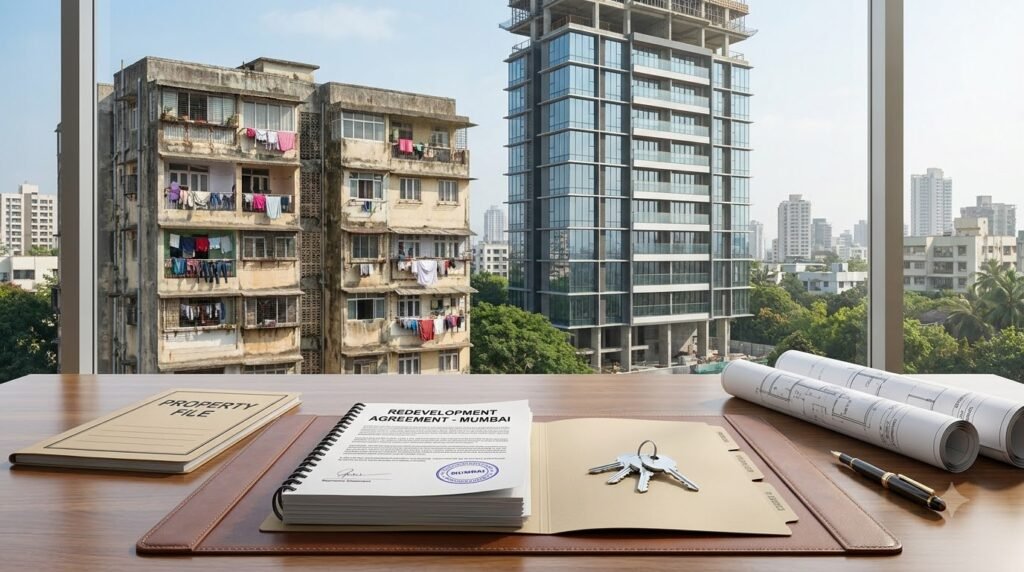
Redevelopment is one of the biggest events a Mumbai flat owner will go through — bigger, in many ways, than the original purchase. A redevelopment agreement Mumbai residents sign with the developer decides everything from the size of their new flat to how long they’ll wait in transit accommodation. Yet many owners sign the developer’s standard draft without reviewing it the way they would a property agreement for a straightforward sale.
It’s the legal contract between the existing flat owners (often represented collectively through the society) and the developer, setting out the terms under which the old building will be demolished and rebuilt, and what each owner receives in return — typically a larger flat in the new building, plus compensation for the transition period. Every redevelopment project above the applicable size threshold must also be registered with the Maharashtra Real Estate Regulatory Authority (MahaRERA), which gives owners a way to independently verify the developer’s registration status before signing any redevelopment agreement Mumbai authorities recognize as valid.
The Development Agreement is signed between the society and the developer for the project as a whole. The Permanent Alternate Accommodation Agreement (PAAA) is the individual agreement between each flat owner and the developer, confirming exactly what that specific owner will receive. Both documents matter — the PAAA is what protects you individually if there’s a dispute later, in much the same way an individual property agreement protects a buyer in a regular transaction.
Most of these disputes trace back to vague or missing clauses in the original agreement — which is exactly why careful drafting at the start matters more than negotiating after the fact.
Draft My Documents works with flat owners and societies going through redevelopment to review and draft agreements — both the society-level Development Agreement and the individual PAAA — so the numbers, timelines, and amenities you were promised verbally are actually written into the contract. We flag missing penalty clauses, unclear carpet area terms, and payment schedules before you sign — because a well-drafted redevelopment agreement Mumbai owners can rely on is prepared before the dispute begins, not after. See our full range of property documentation services or reach out directly to have your redevelopment agreement reviewed.
Phone: +91 9016855337 / +91 9867170895
Email: draftmydocuments1@gmail.com
Office Hours: Mon–Fri, 9:00 AM – 7:00 PM | Sat–Sun: Closed
The society’s agreement covers the building as a whole. It’s still worth having your individual PAAA reviewed, since that document is specific to your flat and your entitlements.
This depends entirely on the penalty clause in your agreement. If one isn’t included, you may have little recourse beyond delayed transit rent — which is why this clause is critical.
Yes, for it to be legally enforceable and to reflect correctly for stamp duty purposes, both the Development Agreement and the PAAA should be registered.
Not if the agreement specifies an exact carpet area figure. Vague wording like “approximately” or “similar to existing” is what allows disputes to arise.
It’s a lump-sum payment developers often make to compensate for redevelopment-related inconvenience. Its tax treatment can vary by circumstance, so it’s worth checking with a tax advisor alongside your legal documentation.

WhatsApp us