Introduction
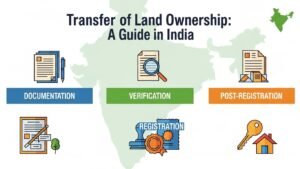
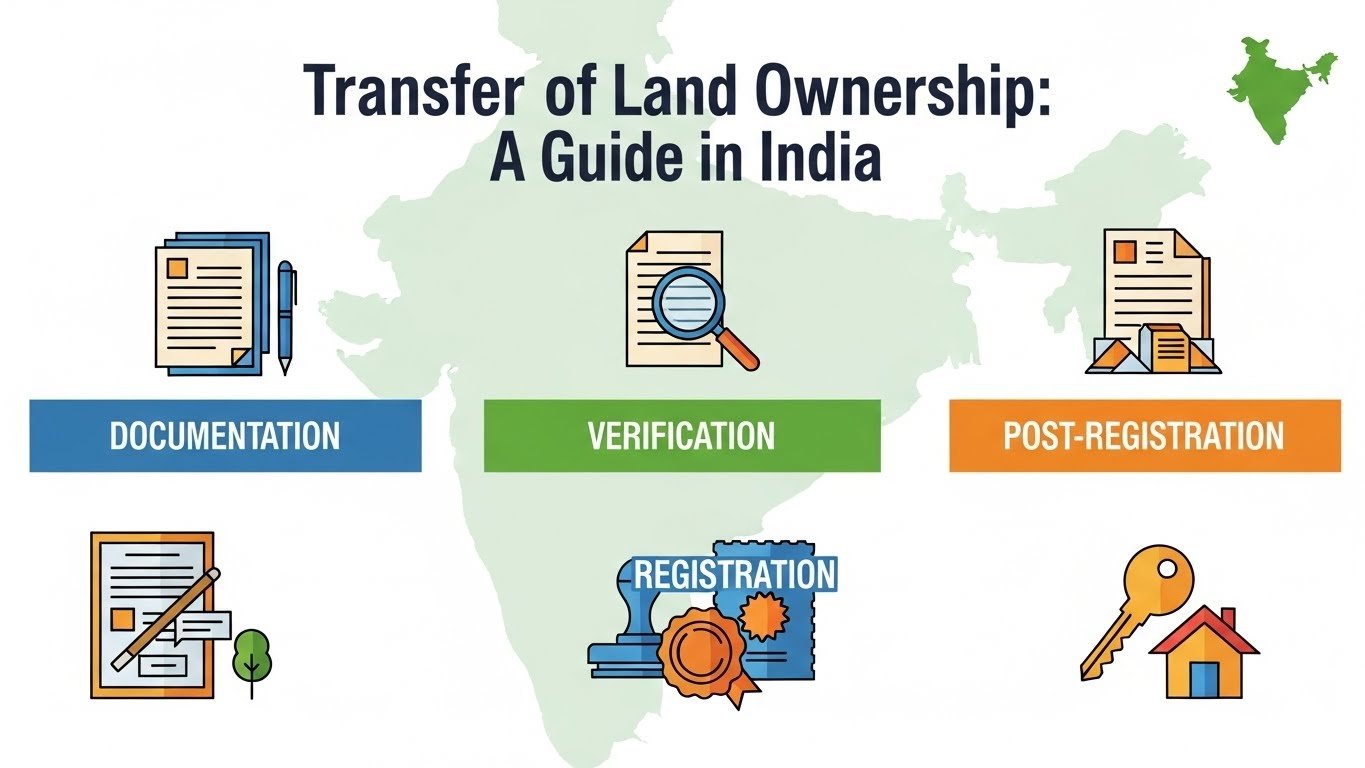
Owning land is a valuable asset, but transferring land ownership is a legal process that requires careful planning and compliance with Indian laws. Whether you are buying, selling, gifting, or inheriting land, understanding the transfer of land ownership is essential to ensure a smooth, legal, and dispute-free process.
Many landowners face issues due to incomplete documentation, unclear titles, or procedural errors. This guide explains everything about transferring land ownership in India, including documents, legal requirements, and common mistakes to avoid. For professional assistance, Draft My Documents (https://draftmydocuments.in/) provides expert legal services for property transfers and documentation.
What Is Transfer of Land Ownership?
The transfer of land ownership is the legal process of changing the title of a land parcel from the current owner (transferor) to a new owner (transferee). This transfer ensures that the new owner has full legal rights to sell, mortgage, or develop the land in the future.
Without a proper transfer process, the new owner may face disputes, rejection of property rights, or even fraud.
Why Proper Land Ownership Transfer Is Important
Transferring land ownership correctly provides multiple benefits:
1. Legal Recognition
Ensures the new owner is officially recognized by law
2. Protection Against Disputes
Prevents future conflicts with family members or third parties
3. Clear Ownership Records
Helps in municipal, revenue, and land registry updates
4. Financial Security
Essential for obtaining loans, selling, or developing land
5. Compliance With Tax Rules
Ensures property tax and capital gains tax obligations are correctly managed
Types of Land Ownership Transfers in India
There are multiple ways to transfer land ownership depending on the situation:
1. Sale Deed
A sale deed is the most common method of transferring ownership for consideration (money).
Key Features
Legal document proving ownership transfer
Must be registered at the Sub-Registrar office
Requires payment of stamp duty and registration fees
2. Gift Deed
A gift deed is used to transfer land voluntarily without any monetary consideration.
Key Features
Commonly used for family transfers
Must be registered to be legally valid
Stamp duty is lower for close relatives
3. Inheritance or Will
Land can be transferred through a will or inheritance after the death of the owner.
Key Features
Takes effect after the testator passes away
No registration required, but recommended
Helps avoid disputes among heirs
4. Relinquishment/Release Deed
One co-owner may release their share in favor of another.
Key Features
Common in family settlements
Must be registered to be valid
Requires legal drafting to prevent disputes
5. Partition Deed
Divides jointly owned land among multiple co-owners.
Key Features
Prevents future conflicts
Must be registered
Specifies exact shares for each co-owner
Legal Requirements for Transferring Land Ownership
To legally transfer land, several requirements must be met:
1. Clear Title
The transferor must have clear ownership, free of disputes, mortgages, or encumbrances.
2. Age and Capacity
The transferor must be of legal age (18+) and of sound mind.
3. Registered Deed
The transfer deed (sale, gift, release, or partition) must be registered under the Registration Act, 1908.
4. Payment of Stamp Duty
Stamp duty is mandatory and varies by state and type of transfer.
5. Consent
All parties involved must give free and informed consent.
Documents Required for Land Ownership Transfer
The exact documents may vary by state but generally include:
1. For the Seller/Transferor
Identity proof (Aadhaar, PAN, Passport, Voter ID)
Previous sale deed/land title document
Encumbrance certificate
No Objection Certificates (if applicable)
2. For the Buyer/Transferee
Identity proof (Aadhaar, PAN, Passport, Voter ID)
Bank account details for payment
PAN card for tax purposes
3. For the Property
Land survey records
Property tax receipts
Mutation / Khata / RTC records
Land map/survey plan
4. Additional Documents
Photographs of parties
Power of Attorney (if applicable)
Affidavit of ownership and rights
Step-by-Step Process for Land Ownership Transfer
Here is a step-by-step guide:
Step 1 – Verify Property Title
Check land records for any disputes, mortgages, or encumbrances
Ensure the seller has full legal ownership
Step 2 – Draft the Transfer Deed
A sale deed, gift deed, release deed, or partition deed must be drafted professionally
Include property details, ownership, consideration, and legal clauses
Step 3 – Pay Stamp Duty
Calculate stamp duty based on property value and state regulations
Pay online or offline via government portals
Step 4 – Register the Deed
Visit the Sub-Registrar office with all documents
Submit originals for verification
Complete biometric authentication or e-sign if required
Step 5 – Mutation of Property
Update municipal, revenue, and land records
Ensure the property is recorded in the name of the new owner
Stamp Duty and Registration Charges
Stamp duty and registration charges vary by state, type of transfer, and relationship between parties:
| Type of Transfer | Stamp Duty Range | Registration Charges |
|---|---|---|
| Sale Deed | 4–7% | 1% approx. |
| Gift Deed (Family) | 1–3% | Minimal |
| Release / Partition | 1–2% | Minimal |
Payment of correct stamp duty is essential to avoid legal disputes or penalties.
Common Mistakes in Land Ownership Transfer
1. Not Verifying Property Title
Leads to disputes, fraud, or rejection of registration.
2. Incomplete Documentation
Missing documents delay registration.
3. Ignoring Stamp Duty
Underpayment can attract penalties and invalidate the transfer.
4. Drafting Errors
Incorrect clauses in deeds may result in legal challenges.
5. Not Consulting Experts
DIY transfers increase the risk of disputes and errors.
Tips for Smooth Transfer of Land Ownership
Always consult legal experts or professional services like Draft My Documents
Keep all property records updated
Verify seller credentials and encumbrances
Use registered deeds to avoid disputes
Maintain copies of all documents for future reference
Why Choose Draft My Documents?
Draft My Documents (https://draftmydocuments.in/) offers professional services to help you transfer land ownership legally and efficiently:
Expert drafting of sale, gift, release, or partition deeds
Guidance on stamp duty and registration fees
Assistance with online submission and municipal updates
Secure and hassle-free document handling
With professional support, you can avoid mistakes, reduce delays, and ensure complete legal compliance.
Conclusion
The transfer of land ownership is a critical process that requires legal expertise, careful documentation, and compliance with government regulations. Whether buying, selling, gifting, or settling family property, following the correct procedure ensures smooth transfer, protects your rights, and prevents future disputes.
For a secure, hassle-free, and legally valid land ownership transfer, trust Draft My Documents.
Visit https://draftmydocuments.in/ today and make your property transfer safe and smooth.