
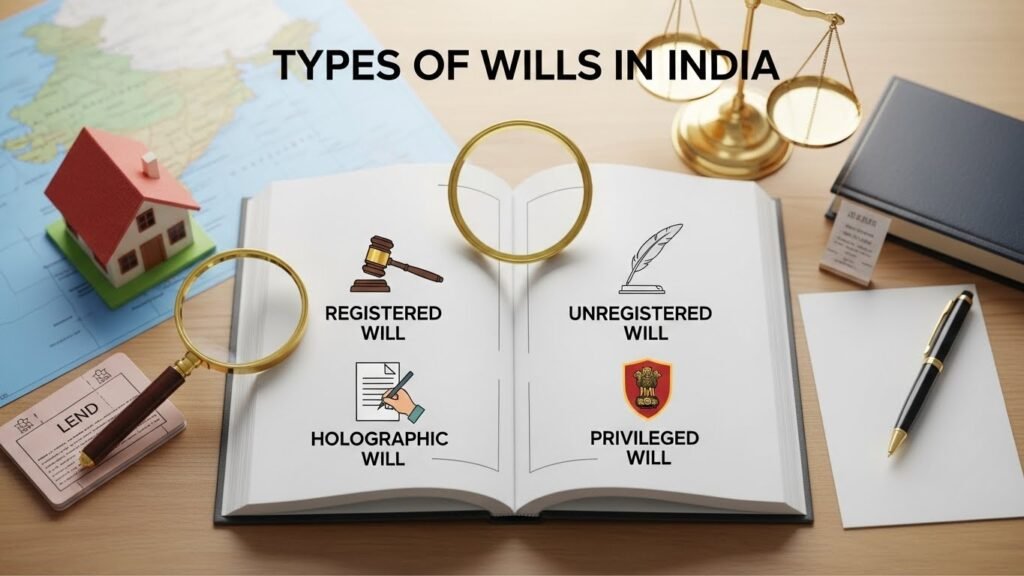
Making a will is one of the most important steps to secure your family’s future and ensure your assets are distributed exactly as you wish. But before writing one, it’s crucial to understand the types of wills in India and how each type affects legality, validity, and execution. Most people believe a will is simply a handwritten or typed document, but Indian law recognizes several forms of wills—each with its own requirements and level of protection.
In this detailed guide, we explore all major types of wills in India, explain their features, advantages, andadvantages, and limitations, and help you choose the right one. If you want professional help drafting a clear and legally strong will, Draft My Documents (https://draftmydocuments.in/) offers expert, affordable, and secure will-drafting services.
Let’s dive in.
The Indian Succession Act, 1925, recognizes various types of wills in India, ensuring individuals can choose the format that best suits their needs. Below are the most commonly accepted types:
A privileged willprivileged will can be made only by:
Soldiers
Airmen
Mariners
These individuals face life-risking situations daily and may need to create a quick will without formalities.
Can be handwritten, signed, or even unwitnessed
Can be oral in certain conditions
Automatically becomes invalid after one month if the person survives the life-risking condition
Useful in emergencies
It offers flexibility during combat or emergency situations where formal will drafting is not possible.
An unprivileged will is the standard type used by most Indian citizens.
Any individual:
Over 18 years
Of sound mind
Not under coercion or influence
Must be in writing
Must be signed by the testator
Must be attested by at least two witnesses
It is legally reliable and widely accepted in all courts.
A conditional willconditional will is executed only if certain conditions are met.
A will takes effect “if I die during surgery.”
“If my son does not return within 5 years, distribute my assets as follows.”
Becomes valid only if the specified condition happens
If the condition does not occur, the will becomes invalid
For people with specific scenarios in mind, such as travel, medical procedures, or uncertain family situations.
A joint will joint will is created by two or more individuals—usually a married couple.
One document contains the wishes of both parties
Comes into effect after the death of both individuals
Cannot be changed by one person alone after the other’s death
Simple for couples with shared assets
Saves time and cost
Lack of flexibility
Can complicate matters if circumstances change
A mutual will is similar to a joint will but created as two separate documents.
Two individual wills
Each person agrees not to change their will without consent
Provides protection for couples with common assets
It offers more independence and flexibility compared to a joint will.
A holographic will is a will entirely written in the testator’s own handwriting.
No typing or printing; fully handwritten
High validity if handwriting is proven
Harder to forge
Must still be attested by two witnesses
Risk of unclear wording or legal gaps
This type of will often appeals to individuals who prefer handwritten documents for authenticity.
Oral wills are recognized only under highly specific conditions.
Spoken rather than written
Accepted only for privileged individuals (soldiers/mariners)
Must be spoken in front of witnesses
Valid only temporarily
High probability of dispute
No written proof
Not accepted for ordinary citizens
A registered will is one that is registered at the sub-registrar’s office.
Provides strong legal protection
Maintained in government records
Hard to challenge in court
Ensures authenticity of the signature
Prevents fraud or tampering
Ensures long-term safety
Helps avoid family disputes
While registration is not mandatory in India, it is highly recommended for absolute clarity and validity.
These are wills created:
For fraudulent purposes
Under coercion
Without the person’s free consent
Such wills are invalid and often lead to legal battles. Understanding this helps ensure you avoid unknowingly creating an invalid will.
A duplicate will is created when a testator wants multiple copies stored in different safe places.
Two or more identical copies
Both copies must be signed
If one is destroyed intentionally, all become invalid
To keep a copy:
With a lawyer
In a locker
With a trustee
A person can create multiple wills for different jurisdictions or properties.
One will for Indian property
One will for foreign assets
Each will covers separate assets
Should not contradict each other
This is ideal for NRIs or individuals owning property in multiple countries.
| Type of Will | Witness Required? | Registration Needed? | Suitable For |
|---|---|---|---|
| Privileged Will | No | No | Soldiers, mariners |
| Unprivileged Will | Yes (2) | Optional | General public |
| Registered Will | Yes | Yes | Strong legal validity |
| Holograph Will | Yes | Optional | Handwritten preference |
| Joint/Multi Will | Yes | Optional | Couples |
| Conditional Will | Yes | Optional | Specific conditions |
| Oral Will | No | No | Emergency situations |
Here are a few questions to guide you:
Choose → Registered Will
Choose → Privileged Will
Choose → Holograph Will
Choose → Joint or Mutual Will
Choose → Concurrent Will
Choose → Conditional Will
Understanding the types of wills in India is crucial for creating a legally strong estate plan. Each type serves a unique purpose, from simple handwritten wills to fully registered wills designed for maximum legal protection. No matter your situation, drafting a proper will ensures your loved ones are protected, disputes are minimized, and your wishes are honored.
If you want to create a clear, legally valid, professionally drafted will, Draft My Documents can help. Visit https://draftmydocuments.in/ to get expert assistance with will drafting, registration guidance, and complete estate planning support.





WhatsApp us