Legal Documents Between Lender and Borrower | Complete List
Legal Documents Between Lender and Borrower: A Complete Checklist
Every loan — big or small, formal or personal — creates a legal relationship between two parties: the lender and the borrower. That relationship needs to be defined clearly on paper. Without the right legal documents between lender and borrower, even a well-intentioned loan can turn into a dispute with no clear way to resolve it.
Here’s a complete breakdown of the documents that should exist between a lender and a borrower, and why each one matters.
Why These Documents Matter for Both Parties
Documentation isn’t only about protecting the lender. A borrower benefits equally — clear terms prevent the lender from later disputing the amount repaid, changing the interest rate, or making informal claims. Proper legal documents:
Establish the loan as a legally recognised transaction, not a gift or unexplained transfer
Fix the interest rate, repayment schedule, and default consequences in writing
Provide admissible evidence in court if either party defaults on their obligations
Protect against future misunderstandings, even between close family or friends
Core Legal Documents Between Lender and Borrower
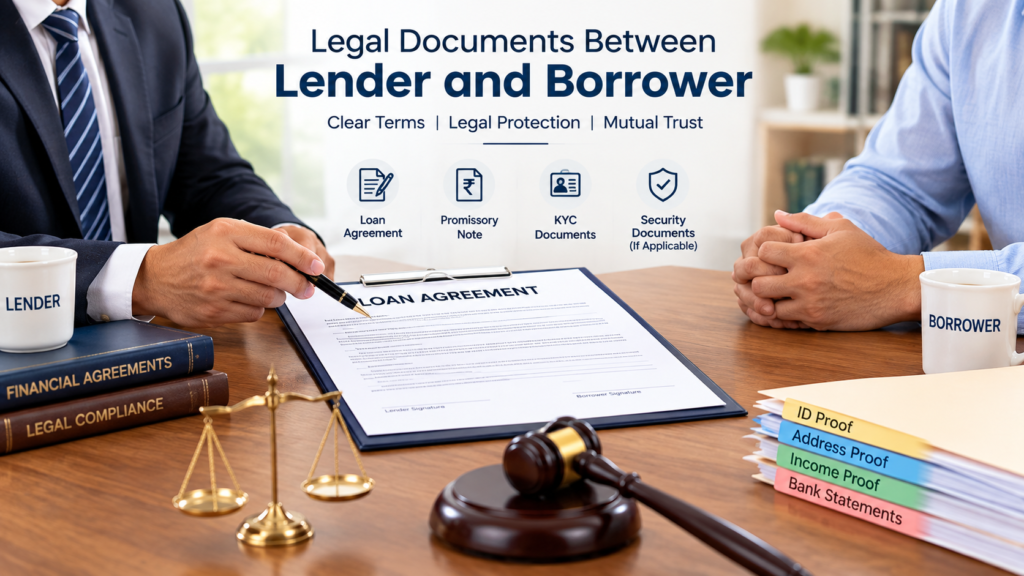
1. Loan Agreement
The primary document governing the relationship. It should include:
Full names and addresses of both lender and borrower
Loan amount and date of disbursement
Interest rate and method of calculation
Repayment terms — instalments or lump sum, with due dates
Default clauses, including penal interest and recovery rights
Details of any security or collateral offered
Signatures of both parties and, ideally, independent witnesses
2. Promissory Note
A shorter, signed commitment by the borrower to repay a fixed sum by a fixed date. It’s commonly used alongside — or instead of — a full loan agreement for smaller or short-term loans, and is quicker to execute.
3. Security or Collateral Agreement
If the borrower is pledging an asset — property, gold, shares, or vehicles — against the loan, a separate security document is needed:
Mortgage Deed — when property is used as security
Hypothecation Agreement — for movable assets like vehicles or inventory
Pledge Agreement — for pledged goods such as gold or securities
This document gives the lender an enforceable claim over the asset in case of default.
4. Personal Guarantee (if applicable)
When a third party guarantees the borrower’s repayment, a personal guarantee document records that commitment. This is common in business loans or when the borrower’s own creditworthiness is limited.
5. Repayment Schedule / Amortisation Table
Attached as an annexure to the loan agreement, this sets out each instalment date and amount, removing ambiguity about what’s due and when.
6. Post-Dated Cheques or NACH/ECS Mandate
For repayment enforcement, lenders often collect post-dated cheques or set up an auto-debit mandate. A bounced cheque can trigger legal proceedings under Section 138 of the Negotiable Instruments Act — a strong deterrent against default.
7. Stamped and, Where Needed, Registered Documents
Under the Indian Stamp Act, loan agreements and promissory notes must generally be stamped to be admissible in court, with rates varying by state. For loans secured against immovable property, registration of the mortgage or security document may also be required to make it enforceable against third parties
Documents Specific to Property-Backed Loans
When the borrower is pledging real estate, additional documents come into play:
Property Search Report — verifies clear title and ownership history
Sale Deed / Ownership Documents — confirm the borrower’s legal right over the property
Mortgage Deed — formally creates the lender’s charge over the property
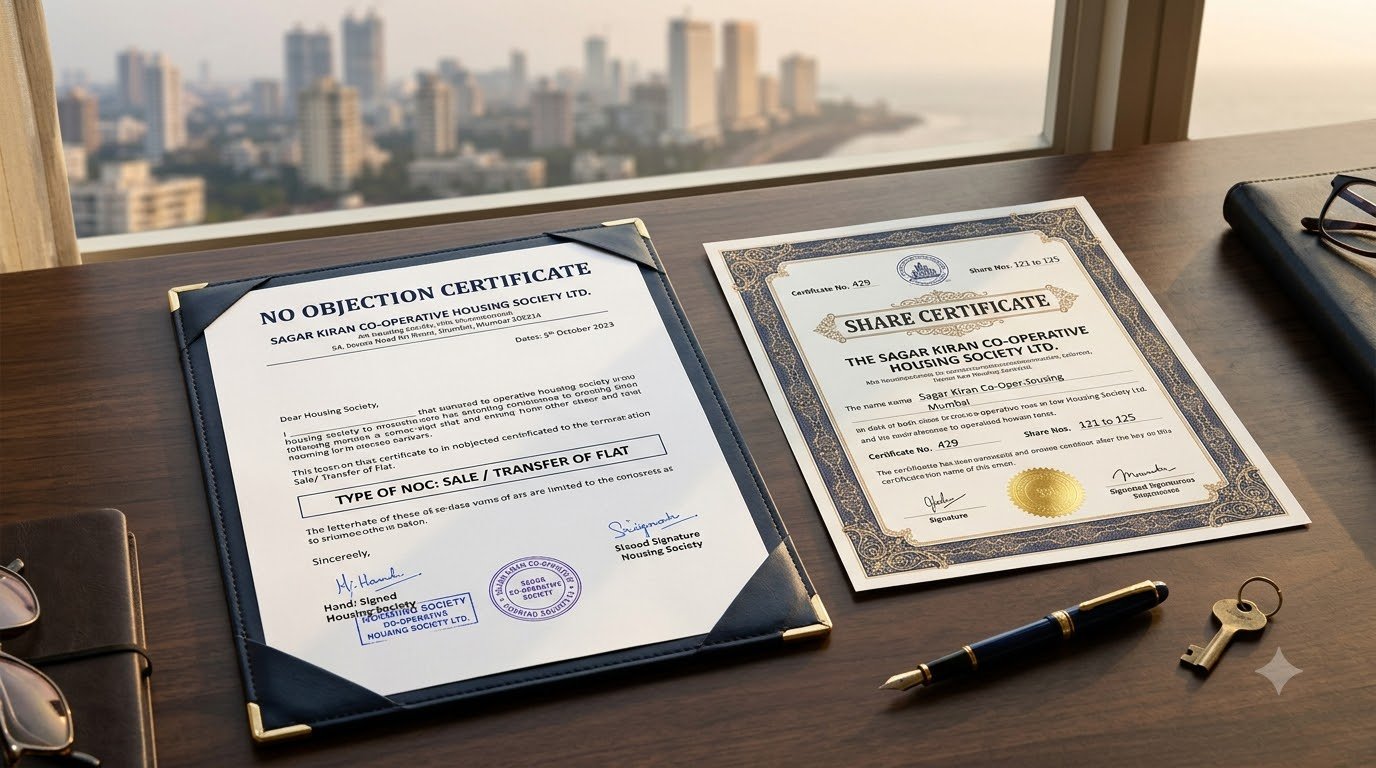
No Objection Certificate (NOC), if the property is jointly owned or under an existing loan
Missing or incorrect documentation at this stage can make the security legally unenforceable, defeating the purpose of taking collateral
Common Gaps That Weaken These Documents
Using a one-size-fits-all template instead of terms specific to the transaction
Leaving the interest clause verbal or vague
Skipping stamping, making the document inadmissible later
No witness signatures on the agreement
No separate security document when collateral is involved
Getting the Documentation Right
Whether you’re the one lending or borrowing, the legal documents between lender and borrower should be drafted with the same care as any formal contract — because that’s exactly what they are. A properly structured loan agreement, promissory note, and security document (where applicable) protect both sides and prevent disputes down the line.
If you need these documents drafted accurately and in compliance with current legal standards, Draft My Documents prepares loan agreements, promissory notes, and property-related security documents for individuals and businesses across India — so the paperwork is right from day one.
1. What is the most important legal document between a lender and a borrower?
The loan agreement is the core document — it defines the amount, interest, repayment terms, and consequences of default. Other documents like promissory notes or security deeds typically support or supplement it.
2. Is a promissory note enough, or do I also need a loan agreement?
For small, short-term loans, a promissory note alone may suffice. For larger amounts or loans with interest, collateral, or a repayment schedule, a full loan agreement is safer and more comprehensive.
3. Do these documents need to be stamped?
Yes. Under the Indian Stamp Act, loan agreements and promissory notes generally need to be stamped to be admissible as evidence in court, with duty rates varying by state.
4. What document protects the lender if the loan is secured against property?
A mortgage deed formally creates the lender’s legal charge over the property. This should be backed by a property search report confirming clear title before the loan is disbursed.
5. Can a personal guarantee replace collateral?
Not quite — a personal guarantee adds a third party’s commitment to repay if the borrower defaults, but it doesn’t create a claim over a specific asset the way a mortgage or pledge agreement does. Lenders often use both together for added security.