

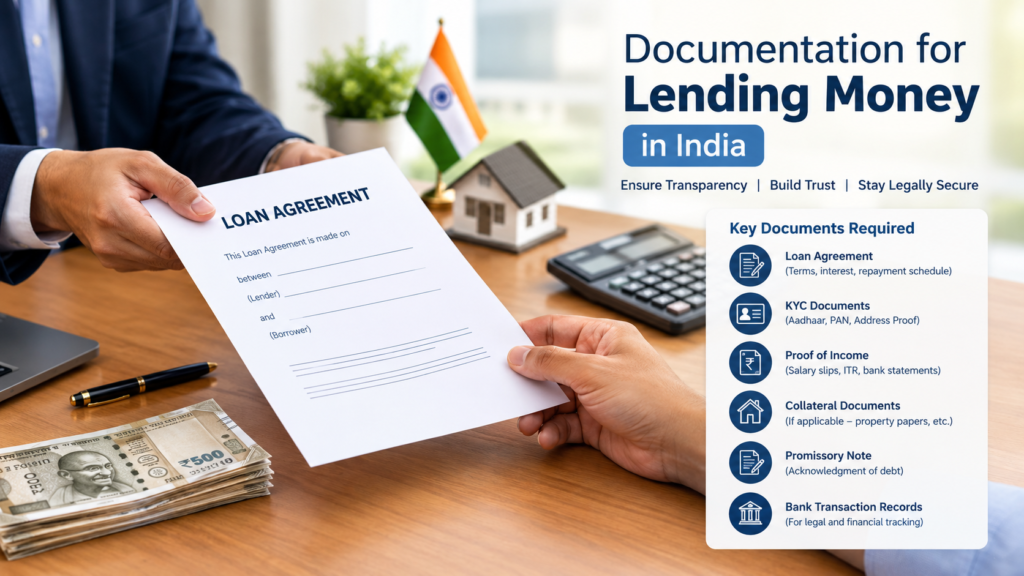
Lending money to a friend, relative, or business associate feels simple until repayment becomes a dispute. Without proper documentation, an informal loan can turn into a lost friendship — or a lost lawsuit. Whether you’re lending ₹10,000 to a colleague or ₹50 lakh against property, the right paperwork protects both the lender and the borrower and gives you legal recourse if things go wrong.
Here’s what you need to know about documenting a personal or private loan in India.
Verbal agreements and casual bank transfers with no paper trail are among the most common reasons lenders lose money — and lose it legally, not just financially. Without a written record:
A properly drafted document removes ambiguity and creates an enforceable legal obligation.
This makes it distinct from other legal documents like a will or a probate order, which serve different purposes.
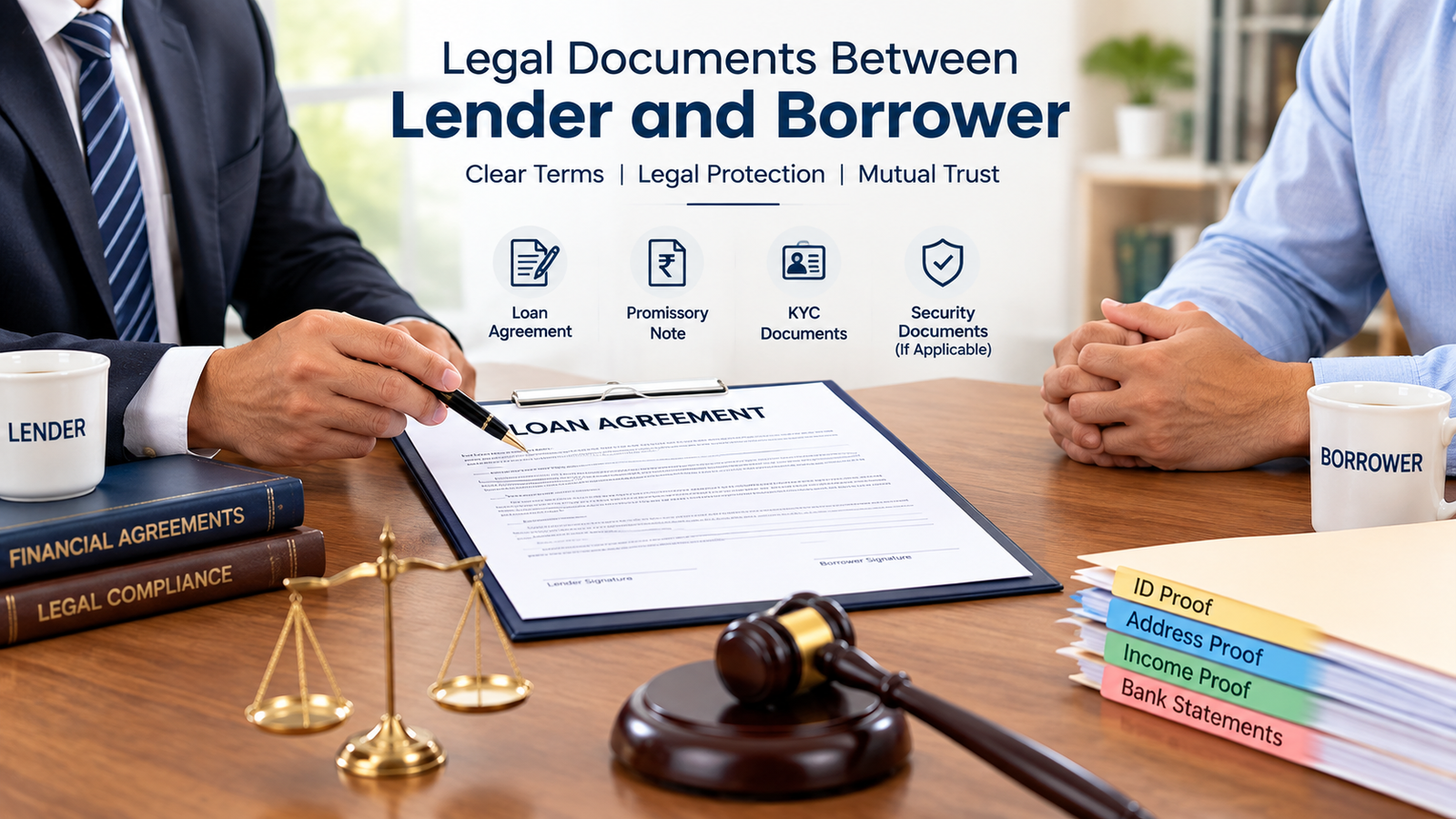
This is the most comprehensive option and the one recommended for any amount beyond a small, short-term favor. A loan agreement should clearly specify:
A well-drafted agreement is enforceable in civil court and serves as primary evidence in any recovery proceeding.
For simpler, smaller-value loans, a promissory note is a faster alternative. It’s a signed, unconditional written promise by the borrower to repay a specific sum by a specific date. It’s less detailed than a full agreement but still legally binding when properly executed and stamped.
Under the Indian Stamp Act, loan agreements and promissory notes generally need to be stamped to be admissible as evidence in court. Stamp duty rates vary by state, so it’s worth confirming the applicable rate for your location before finalising the document. Registration isn’t always mandatory for personal loans, but it strengthens the document’s legal standing, particularly for large amounts or when property is involved as security.
Many lenders ask borrowers to hand over post-dated cheques covering the repayment instalments. This gives an added recovery route — a dishonoured cheque can trigger proceedings under Section 138 of the Negotiable Instruments Act, which carries criminal consequences and is often a strong deterrent against default
If the loan is secured against property, gold, or other assets, you’ll also need:
When money is lent against real estate — either as a formal Loan Against Property (LAP) through a bank or as a private arrangement — documentation becomes more layered. Alongside the loan agreement, you typically need a property search report to verify clear title, a mortgage deed if the property is being mortgaged as security, and correctly executed sale or ownership documents establishing the borrower’s right over the asset being pledged. Errors here can make the security unenforceable, which defeats the purpose of taking collateral in the first place.
Lending money — whether to family, friends, or business contacts — is a financial and legal decision, not just a personal one. Proper documentation doesn’t imply distrust; it protects the relationship by making the terms clear to both sides from the outset.
If you’re lending money and want the paperwork done correctly — a legally sound loan agreement, promissory note, or property-backed loan documentation — it helps to have professionals draft it rather than rely on a generic download. Draft My Documents specialises in accurate, legally compliant documentation, including loan and property-related agreements, for individuals and businesses across India. Getting the paperwork right at the start is far easier — and cheaper — than trying to recover money without it later.
Phone: +91 9016855337 / +91 9867170895
Email: draftmydocuments1@gmail.com
Office Hours: Mon–Fri, 9:00 AM – 7:00 PM | Sat–Sun: Closed
It’s not mandatory for every loan, but it’s strongly recommended. Without a written document, proving the transaction was a loan (and not a gift) becomes very difficult, and courts are far less likely to enforce repayment or interest claims.
A loan agreement is a detailed contract covering interest, repayment schedule, default terms, and security. A promissory note is a shorter, signed promise to repay a fixed amount by a set date — faster to draft but less comprehensive.
Yes. Under the Indian Stamp Act, loan agreements and promissory notes generally need to be stamped to be admissible as evidence in court. Stamp duty rates differ by state.
Yes, but the interest rate and calculation method must be clearly documented in the agreement. Verbal interest arrangements are difficult to enforce if a dispute arises.
A dishonoured post-dated cheque can lead to proceedings under Section 138 of the Negotiable Instruments Act, which carries criminal consequences — making it a strong recovery tool for lenders.




WhatsApp us